Some scary stats about agriculture and biodiversity

20 07 2018

84438Last week we had the pleasure of welcoming the eminent sustainability scientist, Professor Andrew Balmford of the University of Cambridge, to our humble Ecology and Evolution Seminar Series here at Flinders University. While we couldn’t record the seminar he gave because of some of the unpublished and non-proprietary nature of some of his slides, I thought it would be interesting, useful, and thought-provoking to summarise some of the information he gave.

Andrew started off by telling us some of the environmental implications of farming worldwide. Today, existing agriculture covers more than half of ‘useable’ land (i.e., excluding unproductive deserts, etc.), and it has doubled nitrogen fixation rates from a pre-industrial baseline. Globally, agriculture is responsible for between 19 and 35% of all greenhouse gas emissions, and it has caused approximately 40% increase in observed sea-level rise (1961-2003). Not surprisingly, agriculture already occupies the regions of highest biodiversity globally, and is subsequently the greatest source of threat to species.

Read the rest of this entry »


A life of fragmentation

9 05 2018

LauranceWhat do you say to a man whose list of conservation awards reads like a Star Wars film intro, who has introduced terms like the ‘hyperdynamism hypothesis’ to the field of ecology, and whose organisation reaches over one million people each week with updates of the scientific kind?

Interview with Bill Laurance by Joel Howland (originally published in Conjour)


Well, I started by asking what it is that leads him to love the natural world to the extent he does. His answer was disarmingly simple.

“I grew up in the country, on an Oregon cattle ranch, and I think my love of nature just evolved naturally from that. When I was a young kid my dad and I did some fishing and ‘rock-hounding’— searching for rare stones and fossils. As an adolescent and teen I loved heading off into a forest or wilderness, rifle in hand – back in those days you could do that – to see whatever I could find. I watched red foxes hunting, eagles mating, and even heard a mountain lion scream. I got to be a pretty good duck and game-bird hunter.”

He’s quick to point out, however, he realised his taste for guns was not so developed as his love of nature.

“I gave up my rifles for a camera, and enjoyed that even more. I really got into photography for a while. Nature has always just calmed and fascinated me —I guess that’s partly why I became a conservationist.”

Who is Bill Laurance?

William F. Laurance is one of the leading ecology and conservation scientists globally, publishing dozens of papers in journals like Nature and Science, and rewriting the way scientists in the field research the complex interactions between flora and fauna — particularly in rainforests like the Amazon.

He is a Distinguished Research Professor at James Cook University in Australia, a Fellow of the Australian Academy of Science and the American Association for the Advancement of Science, and has received an Australian Laureate Fellowship from the Australian Research Council.

All this for a man from western USA who dreamed of running a zoo. Instead, he has travelled a path of intricate and game-changing research, trailblazing awareness campaigns and inspirational writings that have driven the way many see the environment over the past few decades.

Despite this profile, Laurance gave some time to tell Conjour about his life, his passion and his aims. I asked him what — considering his impressive CV — the future holds.

His response seems a real insight to the man. Read the rest of this entry »


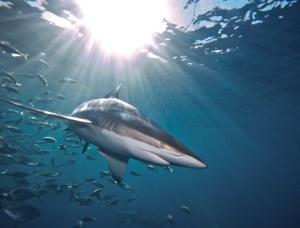
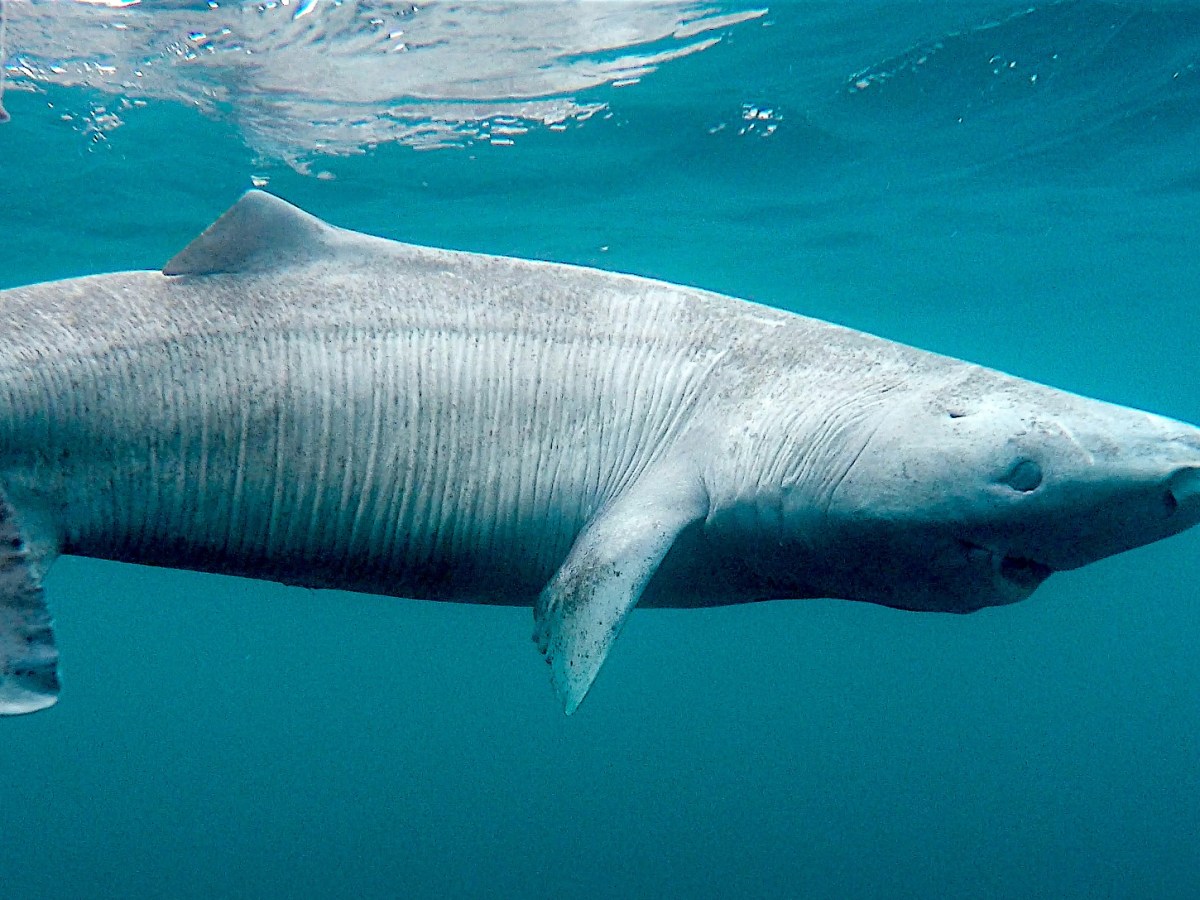
Predicting sustainable shark harvests when stock assessments are lacking

26 03 2018
srb 1

© Andrew Fox

I love it when a good collaboration bears fruit, and our latest paper is a good demonstration of that principle.

It all started a few years ago with an ARC Linkage Project grant we received to examine how the whaler shark fishing industry in Australia might manage its stocks better.

As I’m sure many are aware, sharks around the world aren’t doing terribly well (surprise, surprise — yet another taxon suffering at the hands of humankind). And while some populations (‘stocks’, in the dissociative parlance of the fishing industry) are doing better than others, and some countries have a better track record in managing these stocks than others, the overall outlook is grim.

One of the main reasons sharks tend to fair worse than bony fishes (teleosts) for the same fishing effort is their ‘slow’ life histories. It doesn’t take an advanced quantitative ecology degree to understand that growing slowly, breeding late, and producing few offspring is a good indication that a species can’t handle too much killing before populations start to dwindle. As is the case for most large shark species, I tend to think of them in a life-history sense as similar to large terrestrial mammals.

Now, you’d figure that a taxon with intrinsic susceptibility to fishing would have heaps of good data with which managers could monitor catches and quotas so that declines could be avoided. However, the reality is generally the inverse, with many populations having poor information regarding vital rates (e.g., survival, fertility), age structure, density feedback characteristics, and even simple estimates of abundance. Without such key information, management tends to be ad hoc and often not very effective. Read the rest of this entry »


Penguins cheated by ecosystem change

13 03 2018

Jorge Drexler sings “… I was committed not to see what I saw, but sometimes life is more complex than what it looks like …”*. This excerpt by the Oscar-winning Uruguayan singer seems to foretell the theme of this blog: how the ecological complexity of marine ecosystems can elicit false signals to their predators. Indeed, the fidelity of marine predators to certain feeding areas can turn demographically detrimental to themselves when the amount of available food shrinks. A study of jackass penguins illustrates the phenomenon in a context of overfishing and ocean warming.

CB_JackassPenguinsEcologicalTrapPhoto

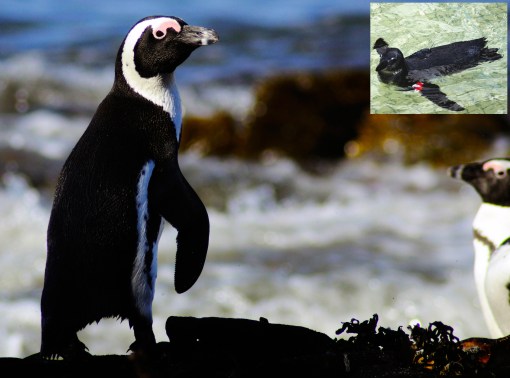
Adult of jackass penguin (Spheniscus demersus) from Robben Island (South Africa) — in the inset, one of the first juveniles released with a satellite transmitter on its back. The species is ‘Endangered’ under IUCN’s criteria (28), following a recent halving of the total population currently estimated at ~ 80,000 adults. Jackass penguins are the only penguins living in Africa, and owe their common name to their vocalisations (you can hear their braying sounds here); adults are ~ 50 cm tall and weigh ~ 3 kg. Photos courtesy of Richard Sherley.

Surface temperature, dissolved oxygen, acidity and primary productivity are, by and large, the top four environmental factors driving the functionality of marine ecosystems (1). Growing scientific evidence supports the idea that anthropogenic warming of the atmosphere and the oceans correlates with this quartet (2). For instance, marine primary productivity is enhanced by increased temperatures (3), but a warmer sea surface intensifies stratification, i.e., stacked layers of seawater with contrasting physical and chemical properties.

In coastal areas experiencing ‘upwelling’ (where winds displace surface water, allowing deep water laden with nutrients to reach the euphotic zone where plankton communities feast), stratification weakens upwelling currents and, in turn, limits the growth of plankton (4) that fuels the entire trophic web, including our fisheries. The study of these complex trophic cascades is particularly cumbersome from the perspective of large marine predators because of their capacity to move long distances, from hundreds to thousands of kilometres (5), with strong implications for their conservation (6).

With those caveats in mind, Richard Sherley and colleagues satellite-tracked the movement of 54 post-fledged, juvenile jackass penguins (Spheniscus demersus) for 2-3 years (7). All individuals had been hatched in eight colonies (accounting for 80% of the global population), and were equipped with platform terminal transmitters. Jackass penguins currently nest in 28 island and mainland locations between South Africa and Namibia. Juveniles swim up to 2000 km in search of food and, when approaching adulthood, return to their native colonies where they reproduce and reside for the remainder of their lives (watch individuals swimming here).

The natural history of this species is linked to the Southern Hemisphere’s trade winds (‘alisios’ for Spanish speakers), which blow from the southeast to the tropics. In the South Atlantic, trade winds sustain the Benguela Current, the waters of which surface from some 300 m of depth and fertilise the marine ecosystems stretching from the Western coasts of South Africa to Angola (8). Read the rest of this entry »


Offshore Energy & Marine Spatial Planning

22 02 2018

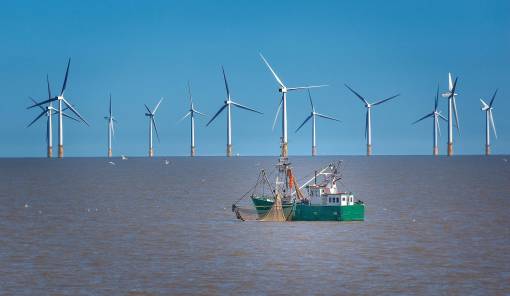
FishingOffshoreWind

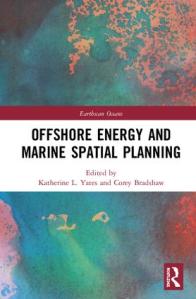
I have the pleasure (and relief) of announcing a new book that’s nearly ready to buy, and I think many readers of CB.com might be interested in what it describes. I know it might be a bit premature to announce it, but given that we’ve just finished the last few details (e.g., and index) and the book is ready to pre-order online, I don’t think it’s too precocious to advertise now.

9781138954533-2

A little history is in order. The brilliant and hard-working Katherine Yates (now at the University of Salford in Manchester, UK) approached me back in 2014 to assist her with co-editing the volume that she wanted to propose for the Routledge Earthscan Ocean series. I admit that I reluctantly agreed at the time, knowing full well what was in store (anyone who has already edited a book will know what I mean). Being an active researcher in energy and biodiversity (perhaps not so much on the ‘planning’ side per se) certainly helped in my decision.

And yes, there were ups and downs, and sometimes it was a helluva lot of work, but Katherine certainly made my life easier, and she has finally driven the whole thing to completion. She deserves most of the credit.

Read the rest of this entry »


Giving a monkey’s about primate conservation

12 12 2017
Urban monkey living (Macaque, Gibraltar) small

Concrete jungle. A Barbary macaque sits in a human-dominated landscape in Gibraltar. Photo: Silviu Petrovan

Saving primates is a complicated business. Primates are intelligent, social animals that have complex needs. They come into conflict with humans when they raid rubbish bins and crops, chew power cables, and in some cases become aggressive towards people.

Humans, however, have the upper hand. While 60% of non-human primate species are threatened, humans grow in numbers and power, building roads through forests, hunting and trapping primates, and replacing their habitat with farms and houses.

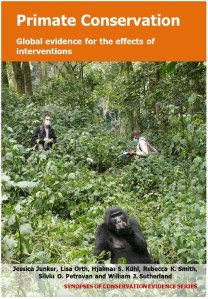
To help primatologists choose the most effective conservation approaches to resolve these problems, researchers in the Conservation Evidence project teamed up with primate researchers to produce a global database on the effectiveness of primate conservation solutions. This free database, which can also be downloaded as a single pdf, summarizes the evidence for 162 conservation interventions — actions that conservationists might take to conserve primates. The data come from searches of over 170 conservation journals and newsletters, and each study is summarized in a single paragraph in plain English, making it possible for conservationists without access to scientific journals to read the key findings.

Front cover primate synopsisSo what works in primate conservation? Well, the picture is rarely straightforward — partly due to the lack of data — but there are some interesting trends. Reducing hunting is one area where there seem to be a range of potentially effective approaches. Community control of patrolling, banning hunting and removing snares was effective in the three studies in which it was tested, all in African countries.

Further emphasizing the importance of involving local communities, implementing no-hunting community policies or traditional hunting bans also appeared helpful in boosting primate numbers. In other places, a more traditional approach of using rangers to protect primates has proved a winning strategy. Training rangers, providing them with arms, and increasing ranger patrols all worked to protect primates from poachers. Identifying the circumstances in which community led approaches or ranger patrols work will be key to implementing the most appropriate response to each conservation challenge. Read the rest of this entry »


Two new postdoctoral positions in ecological network & vegetation modelling announced

21 07 2017

19420366_123493528240028_621031473222812853_n

With the official start of the new ARC Centre of Excellence for Australian Biodiversity and Heritage (CABAH) in July, I am pleased to announce two new CABAH-funded postdoctoral positions (a.k.a. Research Associates) in my global ecology lab at Flinders University in Adelaide (Flinders Modelling Node).

One of these positions is a little different, and represents something of an experiment. The Research Associate in Palaeo-Vegetation Modelling is being restricted to women candidates; in other words, we’re only accepting applications from women for this one. In a quest to improve the gender balance in my lab and in universities in general, this is a step in the right direction.

The project itself is not overly prescribed, but we would like something along the following lines of inquiry: Read the rest of this entry »


Boreal forest on the edge of a climate-change tipping point

15 11 2016

As some know, I dabble a bit in the carbon affairs of the boreal zone, and so when writer Christine Ottery interviewed me about the topic, I felt compelled to reproduce her article here (originally published on EnergyDesk).

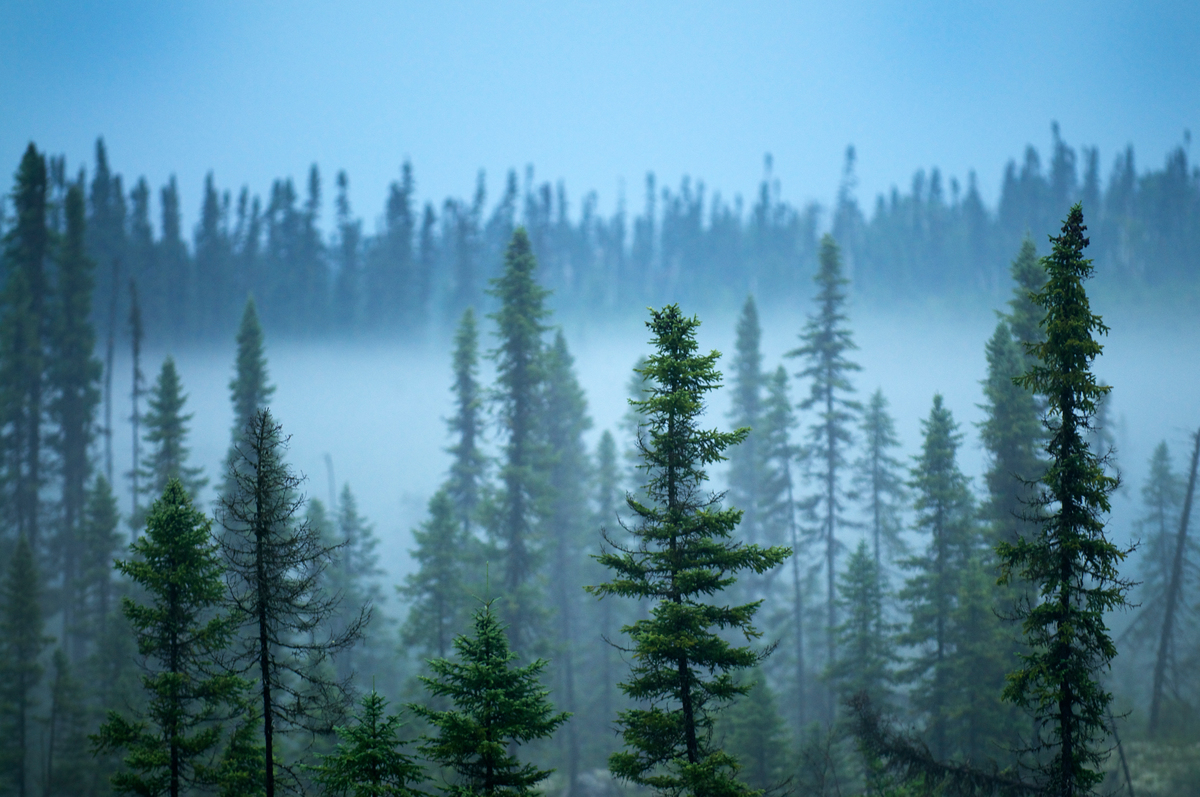
A view of the Waswanipi-Broadback Forest in the Abitibi region of Northern Quebec, one of the last remaining intact Boreal Forests in the province (source: EnergyDesk).

A view of the Waswanipi-Broadback forest in the Abitibi region of northern Quebec, one of the last remaining intact boreal forests in the Canadian province (source: EnergyDesk).

The boreal forest encircles the Earth around and just below the Arctic Circle like a big carbon-storing hug. It can mostly be found covering large swathes of Russia, Canada and Alaska, and some Scandinavian countries.

In fact, the boreal – sometimes called by its Russian name ‘taiga’ or ‘Great Northern Forest’ – is perhaps the biggest terrestrial carbon store in the world.

So it’s important to protect in a world where we’re aiming for 1.5 or – at worst – under two degrees celsius of global warming.

“Our capacity to limit average global warming to less than 2 degrees is already highly improbable, so every possible mechanism to reduce emissions must be employed as early as possible. Maintaining and recovering our forests is part of that solution,” Professor Corey Bradshaw, a leading researcher into boreal forests based at the University of Adelaide, told Energydesk.

It’s not that tropical rainforests aren’t important, but recent research led by Bradshaw published in Global and Planetary Change shows that that there is more carbon held in the boreal forests than previously realised.

But there’s a problem. Read the rest of this entry »


Inexorable rise of human population pressures in Africa

31 08 2016
© Nick Brandt

© Nick Brandt

I’ve been a bit mad preparing for an upcoming conference, so I haven’t had a lot of time lately to blog about interesting developments in the conservation world. However, it struck me today that my preparations provide ideal material for a post about the future of Africa’s biodiversity.

I’ve been lucky enough to be invited to the University of Pretoria Mammal Research Unit‘s 50th Anniversary Celebration conference to be held from 12-16 September this year in Kruger National Park. Not only will this be my first time to Africa (I know — it has taken me far too long), the conference will itself be in one of the world’s best-known protected areas.

While decidedly fortunate to be invited, I am a bit intimidated by the line-up of big brains that will be attending, and of the fact that I know next to bugger all about African mammals (in a conservation science sense, of course). Still, apparently my insight as an outsider and ‘global’ thinker might be useful, so I’ve been hard at it the last few weeks planning my talk and doing some rather interesting analyses. I want to share some of these with you now beforehand, although I won’t likely give away the big prize until after I return to Australia.

I’ve been asked to talk about human population pressures on (southern) African mammal species, which might seem simple enough until you start to delve into the complexities of just how human populations affect wildlife. It’s simply from the perspective that human changes to the environment (e.g., deforestation, agricultural expansion, hunting, climate change, etc.) do cause species to dwindle and become extinct faster than they otherwise would (hence the entire field of conservation science). However, it’s another thing entirely to attempt to predict what might happen decades or centuries down the track. Read the rest of this entry »


Keeping India’s forests

9 08 2016

I’ve just returned from a short trip to the National Centre for Biological Sciences (NCBS) in Bangalore, Karnataka, one of India’s elite biological research institutes.

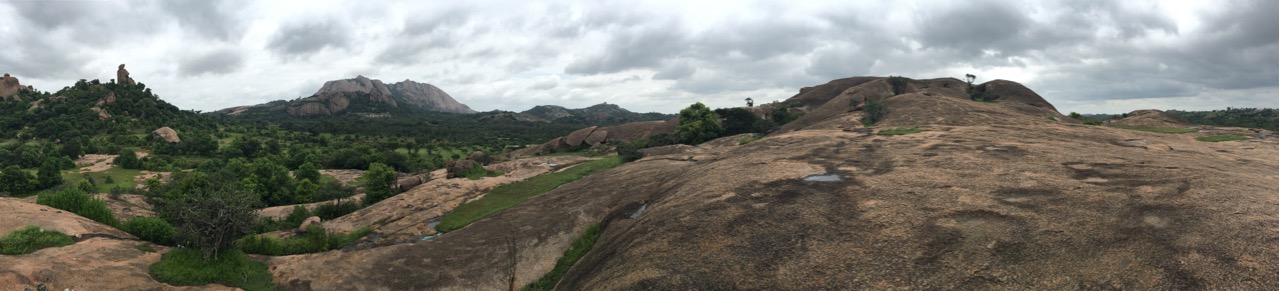
Panorama of a forested landscape (Savandurga monolith in the background) just south of Bangalore, Karnataka (photo: CJA Bradshaw)

Panorama of a forested landscape (Savandurga monolith in the background) just south of Bangalore, Karnataka (photo: CJA Bradshaw)

I was invited to give a series of seminars (you can see the titles here), and hopefully establish some new collaborations. My wonderful hosts, Deepa Agashe & Jayashree Ratnam, made sure I was busy meeting nearly everyone I could in ecology and evolution, and I’m happy to say that collaborations have begun. I also think NCBS will be a wonderful conduit for future students coming to Australia.

It was my first time visiting India1, and I admit that I had many preconceptions about the country that were probably unfounded. Don’t get me wrong — many of them were spot on, such as the glorious food (I particularly liked the southern India cuisine of dhosa, iddly & the various fruit-flavoured semolina concoctions), the insanity of urban traffic, the juxtaposition of extreme wealth and extreme poverty, and the politeness of Indian society (Indians have to be some of the politest people on the planet).

But where I probably was most at fault of making incorrect assumptions was regarding the state of India’s natural ecosystems, and in particular its native forests and grasslands. Read the rest of this entry »


One-two carbon punch of defaunation

30 04 2016

1-2 punchI’ve just read a well-planned and lateral-thinking paper in Nature Communications that I think readers of CB.com ought to appreciate. The study is a simulation of a complex ecosystem service that would be nigh impossible to examine experimentally. Being a self-diagnosed fanatic of simulation studies for just such purposes, I took particular delight in the results.

In many ways, the results of the paper by Osuri and colleagues are intuitive, but that should never be a reason to avoid empirical demonstration of a suspected phenomenon because intuition rarely equals fact. The idea itself is straightforward, but takes more than a few logical steps to describe: Read the rest of this entry »


It’s not always best to be the big fish

3 02 2016

obrien_fish_2Loosely following the theme of last week’s post, it’s now fairly well established that humans tend to pick on the big species first.

From fewer big trees, declines of big carnivores, elephant & rhino poaching, to fishing down the web, big species tend to cop it hardest when it comes to human-caused ecological disturbance.

While there are a lot of different combinations of traits that make some species more vulnerable to extinction than others (see examples for legumes, amphibians, sharks & teleosts, and mammals), one of the main ones is species size.

Generally speaking, larger species tend to produce fewer offspring and breed later in life than smaller species. This means that despite larger species tending to live longer than their smaller counterparts, their ‘slow’ reproductive output means that they are generally more susceptible to rapid environmental change (mainly via human intervention). In other words, their capacity for self-replacement is often too low to counteract the offtake from direct exploitation or habitat loss.

Despite a reasonable scientific understanding of this extinction-risk principle, the degree to which human disturbance affects species’ distributions is much less well quantified, and this is especially true for marine species.

I’m proud to announce another fascinating paper led by my postdoc, Camille Mellin, that has just come out online in Nature CommunicationsHumans and seasonal climate variability threaten large-bodied coral reef fish with small ranges.

With the world’s largest combined dataset of coral reef fish surveys for the entire Indo-Pacific (including the coral reef fish biodiversity hotspot — the Coral Triangle), we examined which conditions best described the distribution of fishes over a range of body sizes. Read the rest of this entry »


No evidence climate change is to blame for Australian megafauna extinctions

29 01 2016

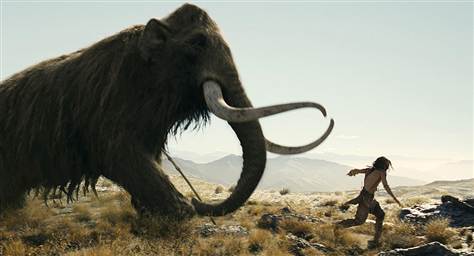
bw spear throwingLast July I wrote about a Science paper of ours demonstrating that there was a climate-change signal in the overall extinction pattern of megafauna across the Northern Hemisphere between about 50,000 and 10,000 years ago. In that case, it didn’t have anything to do with ice ages (sorry, Blue Sky Studios); rather, it was abrupt warming periods that exacerbated the extinction pulse instigated by human hunting.

Contrary to some appallingly researched media reports, we never claimed that these extinctions arose only from warming, because the evidence is more than clear that humans were the dominant drivers across North America, Europe and northern Asia; we simply demonstrated that warming periods had a role to play too.

A cursory glance at the title of this post without appreciating the complexity of how extinctions happen might lead you to think that we’re all over the shop with the role of climate change. Nothing could be farther from the truth.

Instead, we report what the evidence actually says, instead of making up stories to suit our preconceptions.

So it is with great pleasure that I report our new paper just out in Nature Communications, led by my affable French postdoc, Dr Frédérik SaltréClimate change not to blame for late Quaternary megafauna extinctions in Australia.

Of course, it was a huge collaborative effort by a crack team of ecologists, palaeontologists, geochronologists, paleo-climatologists, archaeologists and geneticists. Only by combining the efforts of this diverse and transdisciplinary team could we have hoped to achieve what we did. Read the rest of this entry »


Getting your conservation science to the right people

22 01 2016

argument-cartoon-yellingA perennial lament of nearly every conservation scientist — at least at some point (often later in one’s career) — is that the years of blood, sweat and tears spent to obtain those precious results count for nought in terms of improving real biodiversity conservation.

Conservation scientists often claim, especially in the first and last paragraphs of their papers and research proposals, that by collecting such-and-such data and doing such-and-such analyses they will transform how we manage landscapes and species to the overall betterment of biodiversity. Unfortunately, most of these claims are hollow (or just plain bullshit) because the results are either: (i) never read by people who actually make conservation decisions, (ii) not understood by them even if they read the work, or (iii) never implemented because they are too vague or too unrealistic to translate into a tangible, positive shift in policy.

A depressing state of being, I know.

This isn’t any sort of novel revelation, for we’ve been discussing the divide between policy makers and scientists for donkey’s years. Regardless, the whinges can be summarised succinctly: Read the rest of this entry »


Outright bans of trophy hunting could do more harm than good

5 01 2016

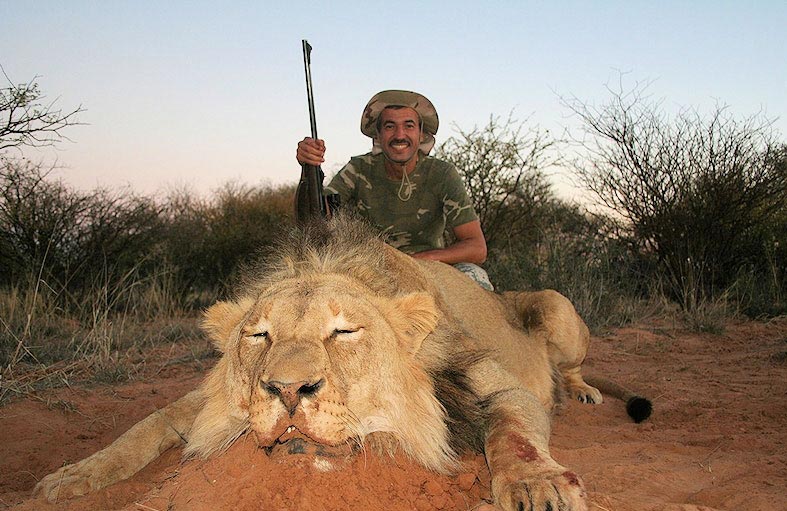
In July 2015 an American dentist shot and killed a male lion called ‘Cecil’ with a hunting bow and arrow, an act that sparked a storm of social media outrage. Cecil was a favourite of tourists visiting Hwange National Park in Zimbabwe, and so the allegation that he was lured out of the Park to neighbouring farmland added considerable fuel to the flames of condemnation. Several other aspects of the hunt, such as baiting close to national park boundaries, were allegedly done illegally and against the spirit and ethical norms of a managed trophy hunt.

In May 2015, a Texan legally shot a critically endangered black rhino in Namibia, which also generated considerable online ire. The backlash ensued even though the male rhino was considered ‘surplus’ to Namibia’s black rhino populations, and the US$350,000 generated from the managed hunt was to be re-invested in conservation. Together, these two incidents have triggered vociferous appeals to ban trophy hunting throughout Africa.

These highly politicized events are but a small component of a large industry in Africa worth > US$215 million per year that ‘sells’ iconic animals to (mainly foreign) hunters as a means of generating otherwise scarce funds. While to most people this might seem like an abhorrent way to generate money, we argue in a new paper that sustainable-use activities, such as trophy hunting, can be an important tool in the conservationist’s toolbox. Conserving biodiversity can be expensive, so generating money is a central preoccupation of many environmental NGOs, conservation-minded individuals, government agencies and scientists. Making money for conservation in Africa is even more challenging, and so we argue that trophy hunting should and could fill some of that gap. Read the rest of this entry »


Game bird madness

4 11 2015

Gamecart_largeI just returned to Paris after a brief visit to the University of Aberdeen over the weekend. My hosts, Xavier Lambin and Beth Scott, were not only marvellously welcoming, I also learned a lot about the travesty that is game bird management in the United Kingdom, and especially in Scotland.

As you might already know, the Great Britons are a little cuckoo for birds — I’d even wager that the country produces more twitchers than any other country on Earth. The plus side is that there are few national taxa better censused and studied that British birds, because so many non-scientists get into the spirit of data collection. Hell, I’ve even had a play with some of their datasets.

The other side of this bird madness is not so good — I’m talking about the massive biomass of game birds reared, released and shot every year in the United Kingdom. It’s not the hunting per se with which I take issue, it’s the insane manipulation of an entire ecosystem for the benefit of a few species. Read the rest of this entry »


Ice Age? No. Abrupt warmings and hunting together polished off Holarctic megafauna

24 07 2015
Oh shit oh shit oh shit ...

Oh shit oh shit oh shit …

Did ice ages cause the Pleistocene megafauna to go extinct? Contrary to popular opinion, no, they didn’t. But climate change did have something to do with them, only it was global warming events instead.

Just out today in Science, our long-time-coming (9 years in total if you count the time from the original idea to today) paper ‘Abrupt warmings drove Late Pleistocene Holarctic megafaunal turnover‘ demonstrates for the first time that abrupt warming periods over the last 60,000 years were at least partially responsible for the collapse of the megafauna in Eurasia and North America.

You might recall that I’ve been a bit sceptical of claims that climate changes had much to do with megafauna extinctions during the Late Pleistocene and early Holocene, mainly because of the overwhelming evidence that humans had a big part to play in their demise (surprise, surprise). What I’ve rejected though isn’t so much that climate had nothing to do with the extinctions; rather, I took issue with claims that climate change was the dominant driver. I’ve also had problems with blanket claims that it was ‘always this’ or ‘always that’, when the complexity of biogeography and community dynamics means that it was most assuredly more complicated than most people think.

I’m happy to say that our latest paper indeed demonstrates the complexity of megafauna extinctions, and that it took a heap of fairly complex datasets and analyses to demonstrate. Not only were the data varied – the combination of scientists involved was just as eclectic, with ancient DNA specialists, palaeo-climatologists and ecological modellers (including yours truly) assembled to make sense of the complicated story that the data ultimately revealed. Read the rest of this entry »


Earth’s second lung has emphysema

19 02 2015
© WWF

© WWF

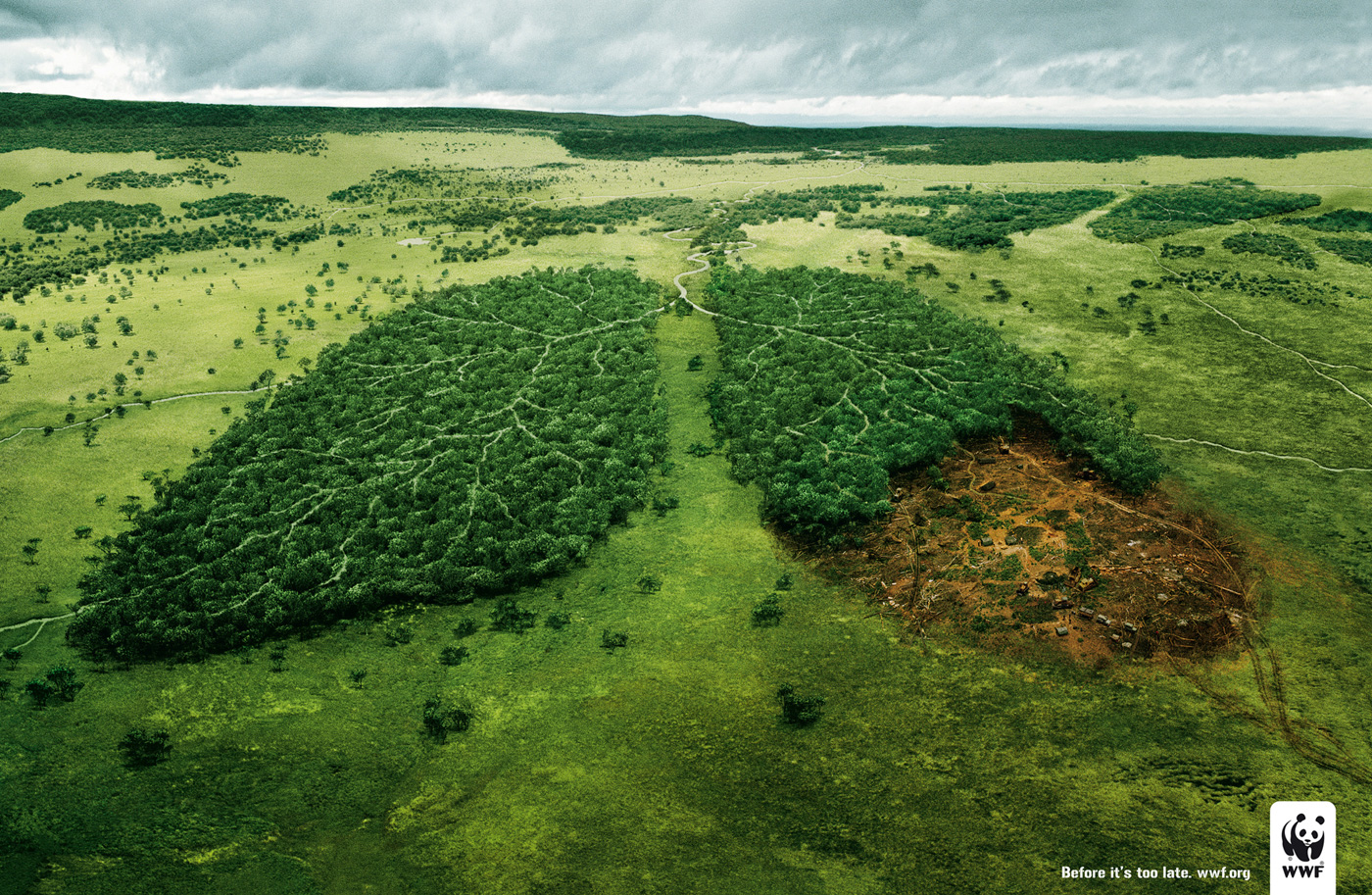
Many consider forests as the ‘lungs’ of the planet – the idea that trees and other plants take up carbon and produce oxygen (the carbon and oxygen cycles). If we are to be fair though, the oceans store about 93% of the Earth’s carbon pool (excluding the lithosphere and fossil fuels) and oceanic phytoplankton produces between 50 and 80% of the oxygen in the atmosphere. For comparison, the terrestrial biosphere – including forests – stores only about 5% of the Earth’s carbon, and produces most of the remainder of atmospheric oxygen.

So there’s no denying that the biggest player in these cycles is the ocean, but that’s not the topic of today’s post. Instead, I’m going to focus on the terrestrial biosphere, and in particular, the carbon storage and flux of forests.

Now it’s pretty well established that tropical forests are major players in the terrestrial carbon cycle, with the most accepted estimates of about 55% the terrestrial carbon stock stored therein. The extensive boreal forest, covering most of the northern half of North America, most of Scandinavia and a huge chunk of Russia, comes in globally at about 33%, and temperate forests store most of the remainder.

That is, until now. Read the rest of this entry »


When human society breaks down, wildlife suffers

22 01 2015

bearGlobal human society is a massive, consumptive beast that on average degrades its life-support system. As we’ve recently reported, this will only continue to get worse in the decades to centuries to come. Some have argued that as long as we can develop our societies enough, the impact of this massive demographic force can be lessened – a concept described by the environmental Kuznets curve. However, there is little evidence that negative societal impact on the environment is lessened as per capita wealth exceeds some threshold; unfortunately environmental damage tends to, on average, increase as a nation’s net wealth increases. That’s not to say that short-term improvements cannot be achieved through technological innovation – in fact, they will be essential to offset the inexorable growth of the global human population.

So poor nations as well as the wealthy ones are responsible for environmental damage. Poorer nations often have ineffective governance systems so they fail to enforce compliance in environmental regulations, but wealthier nations often exploit a high proportion of their natural resources, with the inevitable environmental damage this entails. In some cases however, biodiversity can temporarily escape some of the ravages of society because humans either perceive the area to be too dangerous, or otherwise have no incentive to go there. There are some good examples of the latter, such as the vicinity around the Chernobyl nuclear reactor that melted down in 1986, or the Korean demilitarised zone.

In this vein, I just stumbled across an extremely interesting paper today published online early in Conservation Biology that describes trends in charismatic wildlife (i.e., big mammals) as the former Soviet Union collapsed in 1991 and societal breakdown ensued. The authors had access to an amazing dataset that spanned the decade prior to the collapse, the decade immediately following, and a subsequent decade of societal renewal. What they found was fascinating. Read the rest of this entry »


Using ecological theory to make more money

1 12 2014

huge.9.46974Let’s face it: Australia doesn’t have the best international reputation for good ecological management. We’ve been particularly loathsome in our protection of forests, we have an appalling record of mammal extinctions, we’re degenerate water wasters and carbon emitters, our country is overrun with feral animals and weeds, and we have a long-term love affair with archaic, deadly, cruel, counter-productive and xenophobic predator management. To top it all off, we have a government hell-bent on screwing our already screwed environment even more.

Still, we soldier on and try to fix the damages already done or convince people that archaic policies should be scrapped and redrawn. One such policy that I’ve written about extensively is the idiocy and cruelty of the dingo fence.

The ecological evidence that dingoes are good for Australian wildlife and that they pose less threat to livestock than purported by some evidence-less graziers is becoming too big to ignore any longer. Poisoning and fencing are not only counter-productive, they are cruel, ineffective and costly.

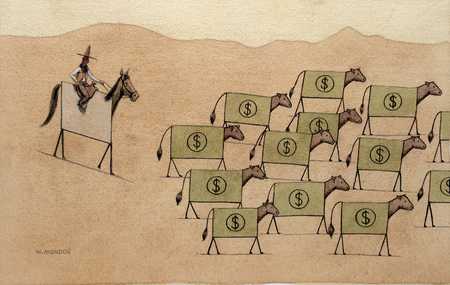
So just when ecologists thought that dingoes couldn’t get any cooler, out comes our latest paper demonstrating that letting dingoes do their thing results in a net profit for cattle graziers.

Come again? Read the rest of this entry »