Nearly a decade ago (my how time flies*), I wrote a post about the guaranteed failure of government policies purporting no-extinction targets within their environmental plans. I was referring to the State of South Australia’s (then) official policy of no future extinctions.
In summary, zero- (or no-) extinction targets at best demonstrate a deep naïvety of how ecology works, and at worst, waste a lot of resources on interventions doomed to fail.
4. Climate change will also guarantee additional (perhaps even most) future extinctions irrespective of Australian policies.
I argued that no-extinction policies are therefore disingenuous to the public in the extreme because they sets false expectations, engender disillusionment after inevitable failure, and ignores the concept of triage — putting our environment-restoration resources toward the species/systems with the best chance of surviving (uniqueness notwithstanding).
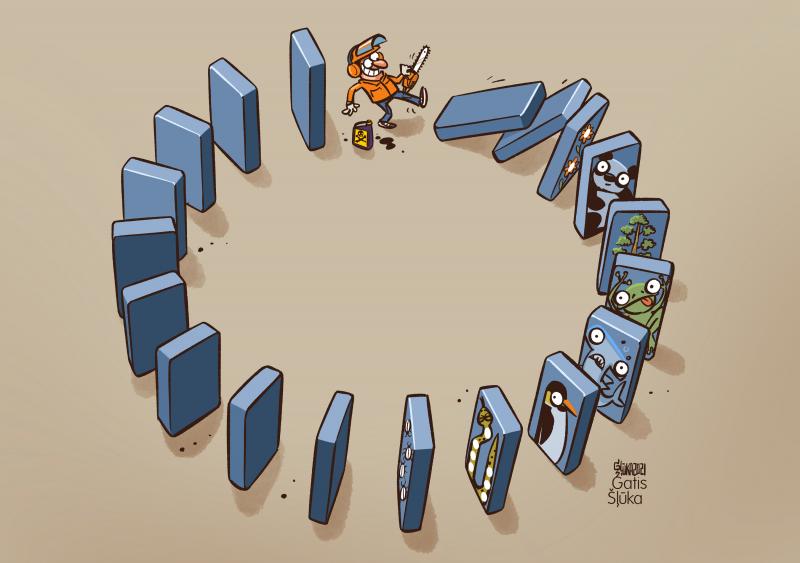
Now that the Australian election has been called for next month, here are a few cartoon reminders of the state of environmental politics in this country (hint: they’re abysmal). I’ve surpassed my normal 6 cartoons/post here in this second set for 2022 because, well, our lives depend on the outcome of 21 May. See full stock of previous ‘Cartoon guide to biodiversity loss’ compendia here.
Carnivores are essential components of trophic webs, and ecosystem functions crumble with their loss. Novel data show the connection between calcareous reefs and sea otters under climate change.
Trophic cascade on the Aleutian Islands (Alaska, USA) linking sea otters (Enhydra lutris) with sea urchins (Strongylocentrotus polyacanthus) and calcareous reefs (Clathromorphum nereostratum). With males weighting up to 50 kg, sea otters have been IUCN-catalogued as Endangered since 2000. The top photo shows a male in a typical, belly-up floating position. The bottom photo shows live (pinkish) and dead (whitish) tissue on the reef surface as a result of grazing of sea urchins at a depth of 10 m. Sea otters are mesopredators, typically foraging on small prey like sea urchins, but their historical decline due to overhunting unleashed the proliferation of the echinoderms. At the same time, acidification and sea-water warming have softened the skeleton of the reefs, allowing for deeper grazing by sea urchins that eliminate the growth layer of living tissue that give the reefs their pinkish hue. Large extents of dead reefs stop fixing the excess in carbonic acid, whose carbon atoms sea water sequesters from the atmosphere enriched in carbon by our burning of fossil fuels. Photos courtesy of Joe Tomoleoni taken in Moss Landing – California, USA (otter), and on the Near Islands – Aleutian Archipelago, Alaska (reef).
For most, the decisions made by people we have never met affect our daily lives. Other species experience the same phenomenon because they are linked to one another through a trophic cascade.
A trophic cascade occurs when a predator limits the abundance or behaviour of its prey, in turn affecting the survival of a third species in lower trophic levels that have nothing directly to do with the predator in question (1).
Sea otters (Enhydra lutris) represent a text-book example of a trophic cascade. These mustelids (see video footage here and here) hunt and control the populations of sea urchins (Strongylocentrotus polyacanthus), hence favouring kelp forests — the fronds of which are eaten by the sea urchins.
Removing the predator from the equation should lead to more sea urchins and less kelp, and this chain of events is exactly what happened along the coasts of the North Pacific (2, 3). The historical distribution of sea otters once ranged from Japan to Baja California through the Aleutian Islands (see NASA’s photo from space, and documentary on the island of Unimak), a sub-Arctic, arc-shaped archipelago including > 300 islands between Alaska (USA) and the Kamchatka Peninsula (Russia), extending ~ 2000 kilometres, and having a land area of ~ 18,000 km2.
But the fur trade during the 18th and 19th centuries brought the species to the brink of extinction, down to < 2000 surviving individuals (4). Without otters, sea urchins boomed and deforested kelp ecosystems during the 20th Century (5). Now we also know that this trophic cascade has climate-related implications in other parts of the marine ecosystem.
Underwater bites
Doug Rasher and collaborators have studied the phenomenon on the Aleutian Islands (6). The seabed of this archipelago is a mix of sandy beds, kelp forests, and calcareous reefs made up of calcium and magnesium carbonates fixed by the red algae Clathromorphum nereostratum. These reefs have grown at a rate of 3 cm annually for centuries as the fine film of living tissue covering the reef takes the carbonates from the seawater (7).
On the whole, I am inclined to conclude that my experience of academia and publishing my work has been largely benign. Despite having published 120-odd peer-reviewed papers, I can count the number of major disputes on one hand. Where there have been disagreements, they have centred on issues of content, and despite the odd grumble, things have rarely escalated to the ad hominem. I have certainly never experienced concerted attacks on my work.
But that changed recently. I work in water science, participating in and leading multi-disciplinary teams that do research directly relevant to water policy and management. My colleagues and I work closely with state and federal governments and are often funded by them through a variety of mechanisms. Our teams are a complex blend of scientists from universities, state and federal research agencies, and private-sector consultancies. Water is big business in Australia, and its management is particularly pertinent as the world’s driest inhabited continent struggles to come to terms with the impacts of climate change.
In the last 10 years, Australia has undergone a AU$16 billion program of water reform that has highlighted the extreme pressure on ecosystems, rural communities, and water-dependent industries. In 2019, two documentaries (Cash Splash and Pumped) broadcast by the Australian Broadcasting Corporation were highly critical of the outcomes of water reform. A group of scientists involved in working on the Murray-Darling Basin were concerned enough about the accuracy of aspects of those stories to support Professor Rob Vertessy from the University of Melbourne in drafting an Open Letter in response. I was a co-author on that letter, and something into which I did not enter lightly. We were very concerned about being seen to advocate for any particular policy position, but were simultaneously committed to contributing to an informed public debate. A later investigation by the Australian Communications and Media Authority also highlighted concerns with the Cash Splash documentary.
Fast forward to 2021 and the publication of a paper by Colloff et al. (2021) in the Australasian Journal of Water Resources. In that paper, the authors were critical of the scientists that had contributed to the Open Letter and claimed they had been subject to “administrative capture” and “issue advocacy”. Administrative capture is defined here as:
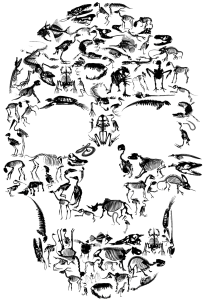
Mounting evidence is pointing to the world having entered a sixth mass extinction. If the current rate of extinction continues we could lose most species by 2200. The implication for human health and wellbeing is dire, but not inevitable.
In the timeline of fossil evidence going right back to the first inkling of any life on Earth — over 3.5 billion years ago — almost 99 percent of all species that have ever existed are now extinct. That means that as species evolve over time — a process known as ‘speciation’ — they replace other species that go extinct.
Extinctions and speciations do not happen at uniform rates through time; instead, they tend to occur in large pulses interspersed by long periods of relative stability. These extinction pulses are what scientists refer to as mass extinction events.
The Cambrian explosion was a burst of speciation some 540 million years ago. Since then, at least five mass extinction events have been identified in the fossil record (and probably scores of smaller ones). Arguably the most infamous of these was when a giant asteroid smashed into Earth about 66 million years ago in what is now the Gulf of Mexico. The collision vapourised species immediately within the blast zone. Later, species were killed off by climate change arising from pulverised particulates suspended in the atmosphere, as well as intense volcano activity stimulated by the buckling of the Earth’s crust from the asteroid’s impact. Together, about 76 percent of all species around at the time went extinct, of which the disappearance of the dinosaurs is most well-known. But dinosaurs didn’t disappear altogether — the survivors just evolved into birds.
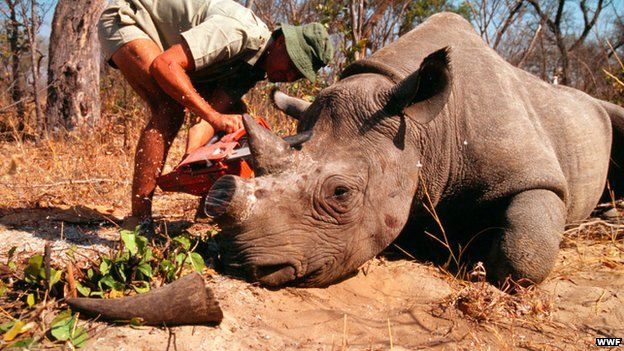
No matter most people’s best intentions, poaching of species in Sub-Saharan Africa for horn and ivory continues unabated. Despite decades of policies, restrictions, interventions, protections, and incentives, many species of elephant and rhino are still hurtling toward extinction primarily because of poaching.
Clearly, we’re doing something heinously wrong.
Collectively, we have to take a long, hard look in the conservation mirror and ask ourselves some difficult questions. Why haven’t we been able to put any real dent in the illegal trade of poached elephant ivory and rhino horn? How many millions (billions?) of dollars have we spent seemingly to little avail? Why haven’t trade bans and intensive security measures done the trick?
The reasons are many, but they boil down to two main culprits:
neo-colonial sentiments driven by the best intentions of mainly overseas NGOs have inadvertently created the ideal conditions for the poaching economy — what we term poachernomics — to thrive by ensuring the continued restriction of legal supply of wildlife products; and
shutting off conservation areas to local people and directing the bulk of ecotourism profits away from source communities have maintained steady poaching incentives in the absence of other non-destructive livelihoods.
The logic of money contradicts the logic of species conservation and human health. As illegal trade has driven pangolins to near extinction, their hunting and market value has kept increasing ― even when we have known that they act as coronavirus reservoirs in the middle of the Covid-19 pandemic.
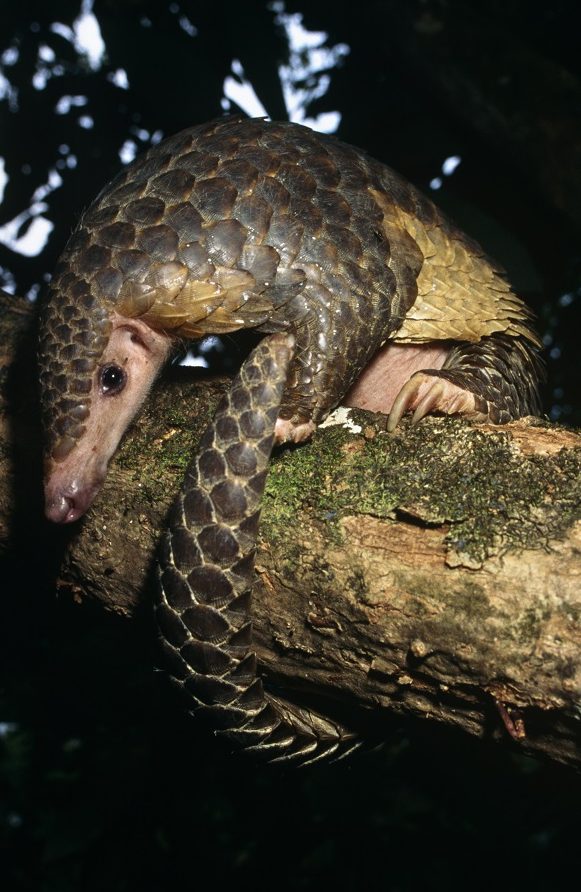
Sunda pangolin (Manis javanica) in a monsoon forest (Sumba Island, Indonesia). With adult weights up to 10 kg and body lengths around half a metre, these animals are mostly solitary and nocturnal, feed on ants and termites, and love tree climbing using bark hollows to shelter and give birth to singletons. The species occurs across mainland and islands of South East Asia, and became ‘Endangered’ in 2008 and ‘Critically Endangered’ in 2014, following a 80% decline in the last 20 years due to hunting and poaching. It has been the most heavily trafficked Asian species, and the IUCN’s assessment states: “… the incentives for harvesting and illegally trading in the species are universally high based on the high financial value of pangolin parts and derivatives”. Captive breeding is unlikely to deter wild collection because (among other reasons) farming costs are high (more so on a large scale) and, even if the species could be traded legally, wild versus farmed pangolin products and individuals are difficult to distinguish (23). Photo courtesy of Michael Pitts
Urbanites are attracted to exotic species, materials, and places. Our purchasing power seems to give us the right to buy any ‘object’ that we can pay for, no matter how exotic the object might be. In such a capitalist rationale, it is no surprise that > 150 thousand illegal cargos with wild animals and plants have been confiscated in 149 countries over the last two decades, moving some 6000 species from one place of the planet to another (1).
Social networks show people interacting with all kinds of fauna, creating the illusion that any animal can become a pet (2). And there’s a multi-$billion market of wildlife for a diverse array of uses including collecting, food, ornamentation, leisure, clothing and medicine (3-5). The paradox is that the rarer a species is, the higher its market value runs and the more lucrative selling it turns out to be, leading to more exploitation and rocketing extinction risk (6).
Clues to understanding human interactions with global ecosystems already exist. The challenge is to read them more accurately so we can design the best path forward for a world beset by species extinctions and the repercussions of global warming.
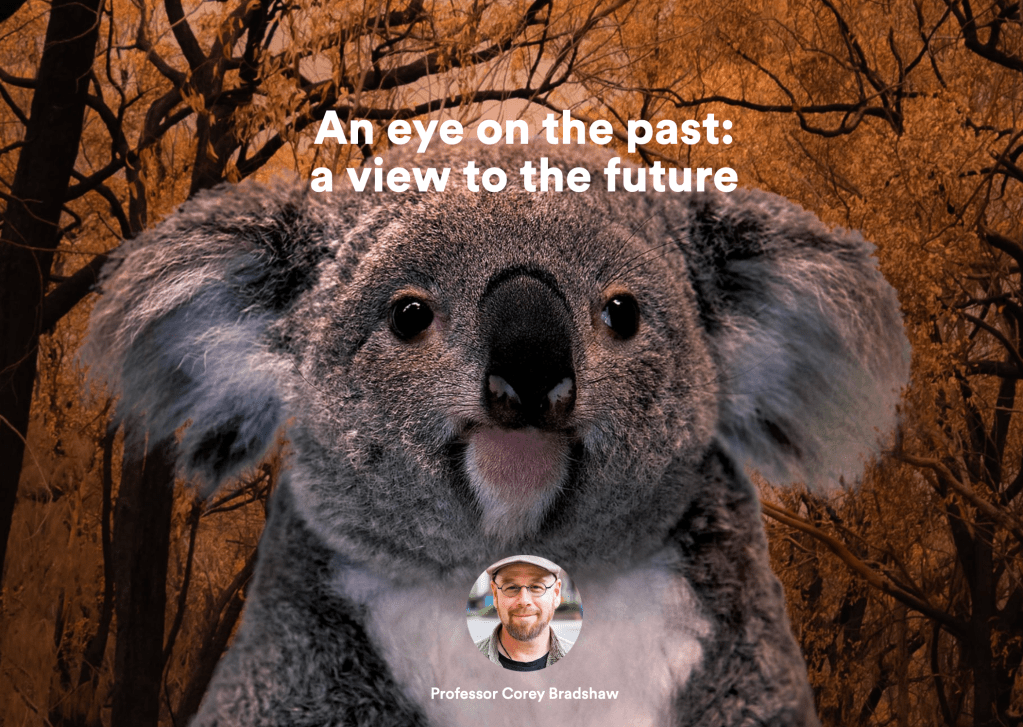
This is the puzzle being solved by Professor Corey Bradshaw, head of the Global Ecology Lab at Flinders University. By developing complex computer modelling and steering a vast international cohort of collaborators, he is developing research that can influence environmental policy — from reconstructing the past to revealing insights of the future.
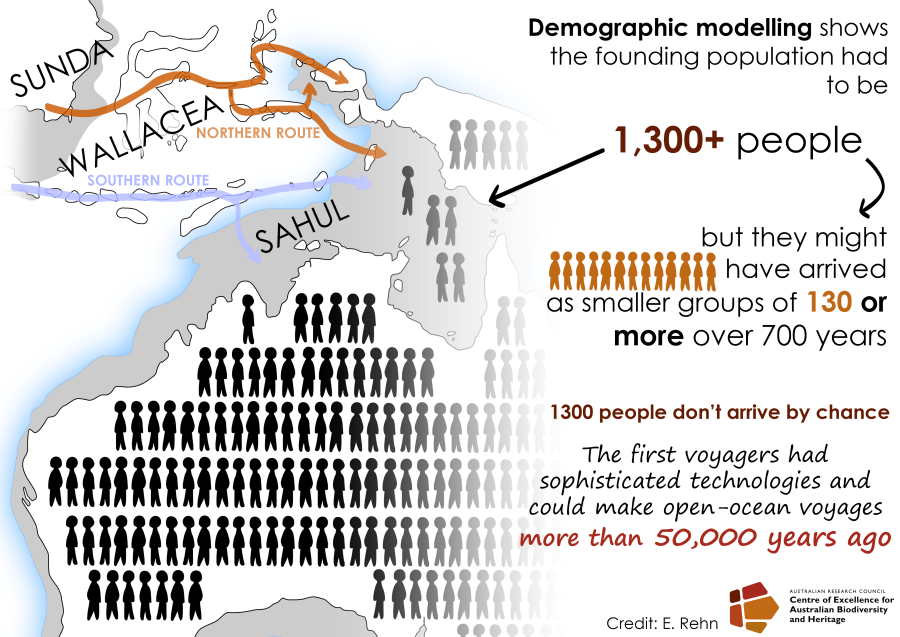
As an ecologist, he aims both to reconstruct and project how ecosystems adapt, how they are maintained, and how they change. Human intervention is pivotal to this understanding, so Professor Bradshaw casts his gaze back to when humans first entered a landscape – and this has helped construct an entirely fresh view of how Aboriginal people first came to Australia, up to 75,000 years ago.
Professor Bradshaw and colleagues identified and tested more than 125 billion possible pathways using rigorous computational analysis in the largest movement-simulation project ever attempted, with the pathways compared to the oldest known archaeological sites as a means of distinguishing the most likely routes.
The study revealed that the first Indigenous people not only survived but thrived in harsh environments, providing further evidence of the capacity and resilience of the ancestors of Indigenous people, and suggests large, well-organised groups were able to navigate tough terrain.
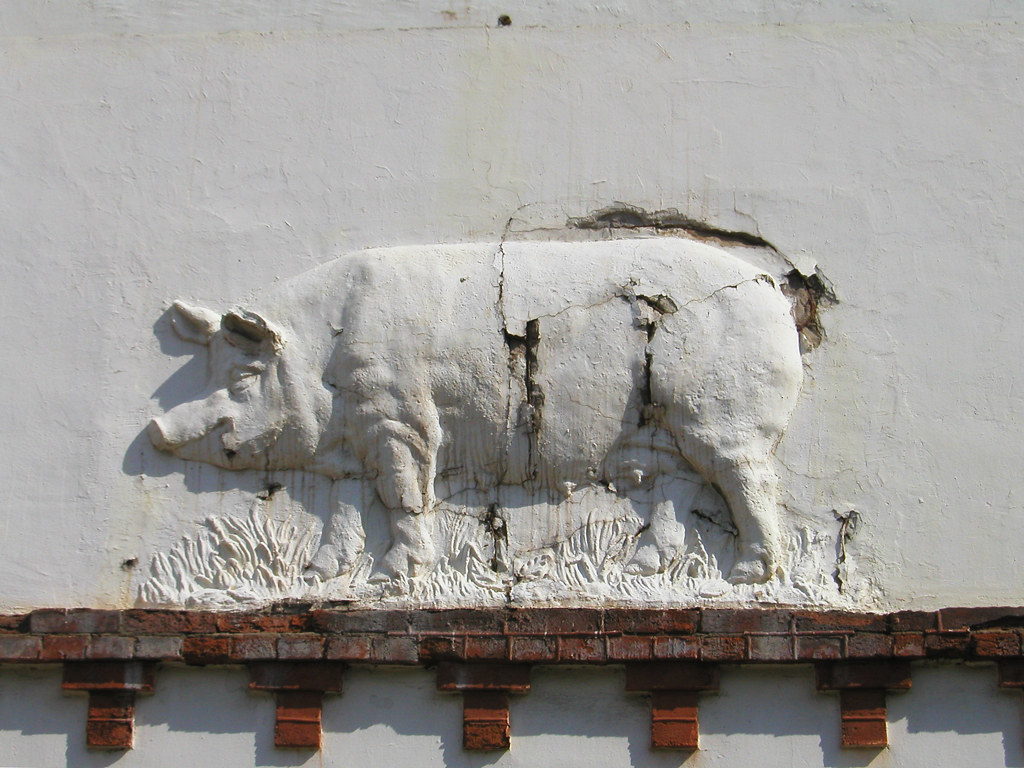
Back in June of this year I wrote (whinged) about the disappointment of writing a lot of ecological models that were rarely used to assist real-world wildlife management. However, I did hint that another model I wrote had assistance one government agency with pig management on Kangaroo Island.
Modelling by the Flinders UniversityGlobal Ecology Laboratory shows the likelihood and feasibility of feral pig eradication under different funding and eradication scenarios. With enough funding, feral pigs could be eradicated from Kangaroo Island in 2 years.
This basically means that because of the model, PIRSA was successful in obtaining enough funding to pretty much ensure that the eradication of feral pigs from Kangaroo Island will be feasible!
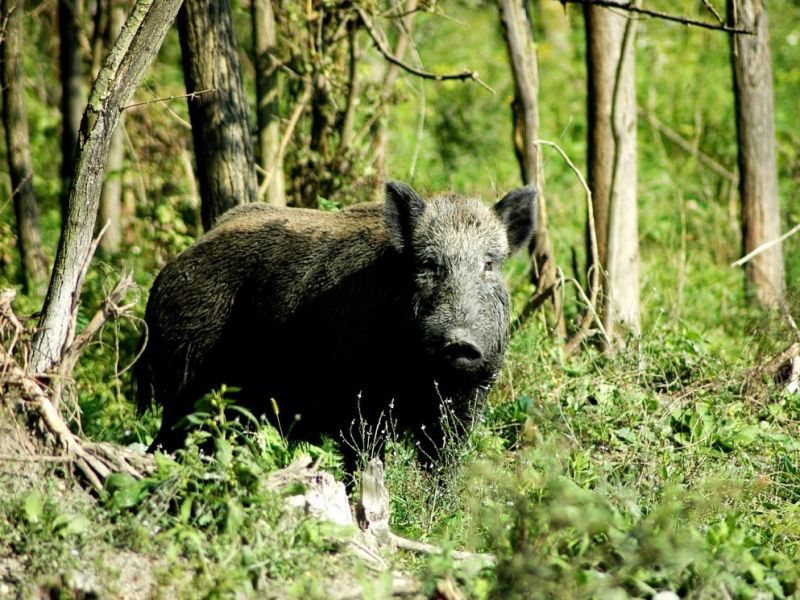
Why is this important to get rid of feral pigs? They are a major pest on the Island, causing severe economic and environmental impacts both to farms and native ecosystems. On the agricultural side of things, they prey on newborn lambs, eat crops, and compete with livestock for pasture. Feral pigs damage natural habitats by up-rooting vegetation and fouling waterholes. They can also spread weeds and damage infrastructure, as well as act as hosts of parasites and diseases (e.g., leptospirosis, tuberculosis, foot-and-mouth disease) that pose serious threats to industry, wildlife, and even humans.
I’d be surprised if any Australians with even a passing interest in science could claim not to have listened to the Science Show before, and I suspect a fair mob of people overseas would be in the same boat.
It was a real privilege to talk with Robyn about our work on the ghastly future, and as always, the production value is outstanding.
After the rather astounding response to our Ghastly Future paper published in January this year (> 443,000 views and counting; 61 citations and counting), we received a Commentary that was rather critical of our article.
A Malthusian slur
We have finally published a Response to the Commentary, which is now available online (accepted version) in Frontiers in Conservation Science. Given that it is published under a Creative Commons Attribution License (CC BY), I can repost the Response here:
In their comment on our paper Underestimating the challenges of avoiding a ghastly future, Bluwstein et al.2 attempt to contravene our exposé of the enormous challenges facing the entire human population from a rapidly degrading global environment. While we broadly agree with the need for multi-disciplinary solutions, and we worry deeply about the inequality of those who pay the costs of biodiversity loss and ecological collapse, we feel obligated to correct misconceptions and incorrect statements that Bluwstein et al.2 made about our original article.
After incorrectly assuming that our message implied the existence of “one science” and a “united scientific community”, the final paragraph of their comment contradicts their own charge by calling for the scientific community to “… stand in solidarity”. Of course, there is no “one science” — we never made such a claim. Science is by its nature necessarily untidy because it is a bottom-up process driven by different individuals, cultures, perspectives, and goals. But it is solid at the core. Scientific confluence is reached by curiosity, rigorous testing of assumptions, and search for contradictions, leading to many — sometimes counter-intuitive or even conflicting — insights about how the world works. There is no one body of scientific knowledge, even though there is good chance that disagreements are eventually resolved by updated, better evidence, although perhaps too slowly. That was, in fact, a main message of our original article — that obligatory specialisation of disparate scientific fields, embedded within a highly unequal and complex socio-cultural-economic framework, reduces the capacity of society to appreciate, measure, and potentially counter the complexity of its interacting existential challenges. We agree that scientists play a role in political struggles, but we never claimed, as Bluwstein et al.2 contended, that such struggles can be “… reduced to science-led processes of positive change”. Indeed, this is exactly the reason our paper emphasized the political impotence surrounding the required responses. We obviously recognize the essential role social scientists play in creating solutions to avoid a ghastly future. Science can only provide the best available evidence that individuals and policymakers can elect to use to inform their decisions.
We certainly recognise that there is no single policy or polity capable of addressing compounding and mounting problems, and we agree that that there is no “universal understanding of the intertwined socio-ecological challenges we face”. Bluwstein et al.2 claimed that we had suggested scientific messaging alone can “… adequately communicate to the public how socio-ecological crises should be addressed”. We did not state or imply such ideas of unilateral scientific power anywhere in our article. Indeed, the point of framing our message as pertaining to a complex adaptive system means that we cannot, and should not, work towards a single goal. Instead, humanity will be more successful tackling challenges simultaneously and from multiple perspectives, by exploiting manifold institutions, technologies, approaches, and governances to match the complexity of the predicament we are attempting to resolve.
Sure, it’s a tough time for everyone, isn’t it? But it’s a lot worse for the already disadvantaged, and it’s only going to go downhill from here. I suppose that most people who read this blog can certainly think of myriad ways they are, in fact, still privileged and very fortunate (I know that I am).
Nonetheless, quite a few of us I suspect are rather ground down by the onslaught of bad news, some of which I’ve been responsible for perpetuating myself. Add lock downs, dwindling job security, and the prospect of dying tragically due to lung infection, many have become exasperated.
What can we do in addition to shifting our focus to making the future a little less shitty than it could otherwise be? I have a few tips that you might find useful:
Shamefully, Australia has one of the highest extinction rates in the world. And the number one threat to our species is invasive or “alien” plants and animals.
But invasive species don’t just cause extinctions and biodiversity loss – they also create a serious economic burden. Our research, published today, reveals invasive species have cost the Australian economy at least A$390 billion in the last 60 years alone.
Our paper – the most detailed assessment of its type ever published in this country – also reveals feral cats are the worst invasive species in terms of total costs, followed by rabbits and fire ants.
Without urgent action, Australia will continue to lose billions of dollars every year on invasive species.
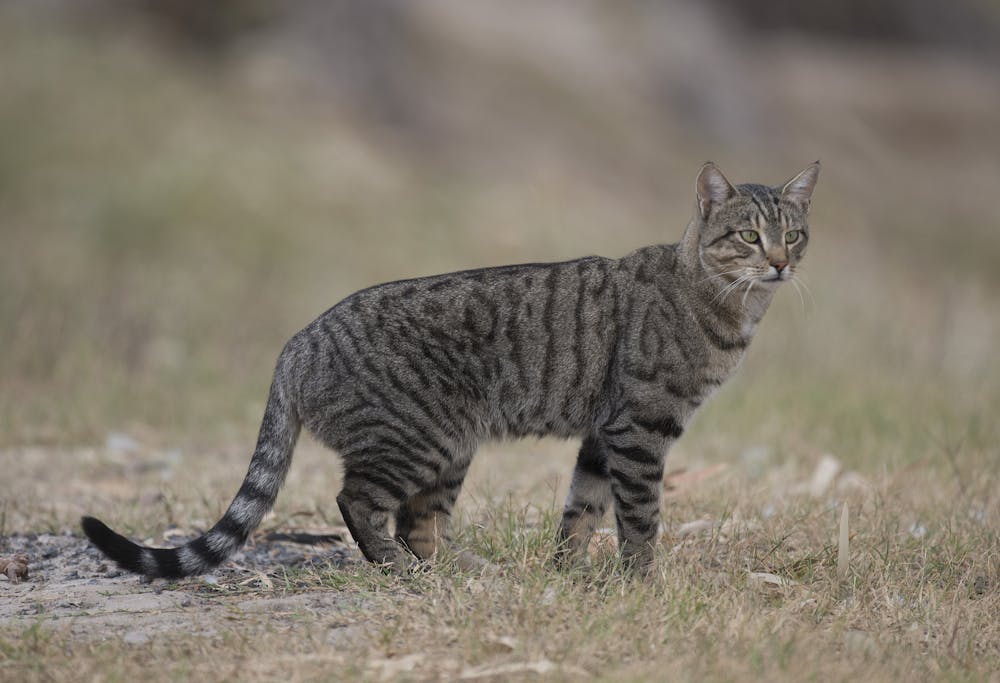
Feral cats are Australia’s costliest invasive species. Source: Adobe Stock/240188862
Huge economic burden
Invasive species are those not native to a particular ecosystem. They are introduced either by accident or on purpose and become pests.
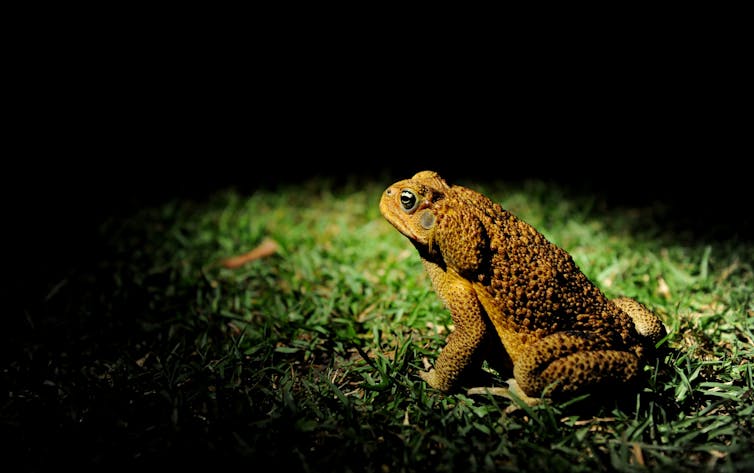
Some costs involve direct damage to agriculture, such as insects or fungi destroying fruit. Other examples include measures to control invasive species like feral cats and cane toads, such as paying field staff and buying fuel, ammunition, traps and poisons.
Our previous research put the global cost of invasive species at A$1.7 trillion. But this is most certainly a gross underestimate because so many data are missing.
As a wealthy nation, Australia has accumulated more reliable cost data than most other regions. These costs have increased exponentially over time – up to sixfold each decade since the 1970s.
I’m not in any way formally involved in either the IPCC or IPBES, although I’ve been involved indirectly in analysing many elements of both the language of the reports and the science underlying their predictions.
Today, The Guardianreported that a leaked copy of an IPCC report scheduled for release soon indicated that, well, the climate-change situation is in fact worse than has been previously reported in IPCC documents.
If you’re a biologist, climatologist, or otherwise-informed person, this won’t come as much of a surprise. Why? Well, the latest report finally recognises that the biosphere is not just some big balloon that slowly inflates or deflates with the whims of long-term climate variation. Instead, climate records over millions of years show that the global climate can and often does shift rapidly between different states.
As someone who writes a lot of models — many for applied questions in conservation management (e.g., harvest quotas, eradication targets, minimum viable population sizes, etc.), and supervises people writing even more of them, I’ve had many different experiences with their uptake and implementation by management authorities.
Some of those experiences have involved catastrophic failures to influence any management or policy. One particularly painful memory relates to a model we wrote to assist with optimising approaches to eradicate (or at least, reduce the densities of) feral animals in Kakadu National Park. We even wrote the bloody thing in Visual Basic (horrible coding language) so people could run the module in Excel. As far as I’m aware, no one ever used it.
Others have been accepted more readily, such as a shark-harvest model, which (I think, but have no evidence to support) has been used to justify fishing quotas, and one we’ve done recently for the eradication of feral pigs on Kangaroo Island (as yet unpublished) has led directly to increased funding to the agency responsible for the programme.
According to Altmetrics (and the online tool I developed to get paper-level Altmetric information quickly), only 3 of the 16 of what I’d call my most ‘applied modelling’ papers have been cited in policy documents:
They’re one of the most damaging environmental forces on Earth. They’ve colonised pretty much every place humans have set foot on the planet. Yet you might not even know they exist.
We’re talking about alien species. Not little green extraterrestrials, but invasive plants and animals not native to an ecosystem and which become pests. They might be plants from South America, starfish from Africa, insects from Europe or birds from Asia.
These species can threaten the health of plants and animals, including humans. And they cause huge economic harm. Our research, recently published in the journal Nature, puts a figure on that damage. We found that globally, invasive species cost US$1.3 trillion (A$1.7 trillion) in money lost or spent between 1970 and 2017.
The cost is increasing exponentially over time. And troublingly, most of the cost relates to the damage and losses invasive species cause. Meanwhile, far cheaper control and prevention measures are often ignored.
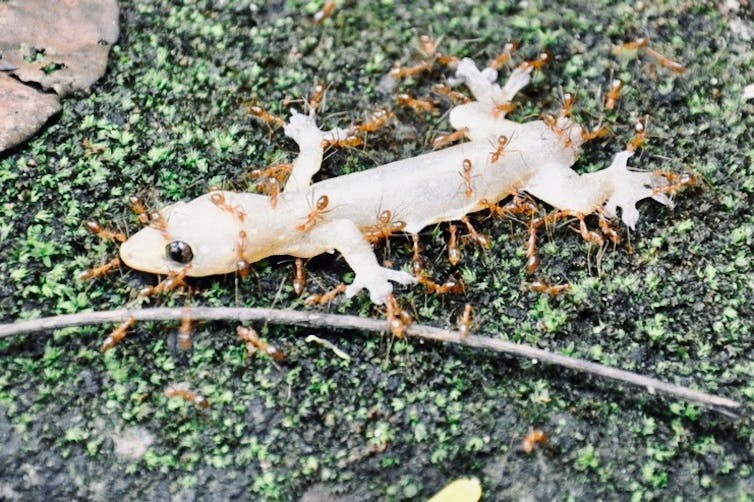
Yellow crazy ants, such as these attacking a gecko, are among thousands of invasive species causing ecological and economic havoc. Dinakarr, CC0, Wikimedia Commons
An expansive toll
Invasive species have been invading foreign territories for centuries. They hail from habitats as diverse as tropical forests, dry savannas, temperate lakes and cold oceans.
They arrived because we brought them — as pets, ornamental plants or as stowaways on our holidays or via commercial trade.
Get Conservation Bytes by Email Enter your email address to receive new posts on conservation, biodiversity, and environmental science directly in your inbox. No need to visit the website regularly, and you can unsubscribe at any time.
Hulton Archive / Getty Images We warn readers that the content of this study is confronting and may be distressing. In April 1789, the first smallpox epidemic among Aboriginal people in the Sydney region began, just 16 months after Europeans arrived on the First Fleet. Little is known of the true scale of the epidemic,…
Just over two years ago I reported the ‘likely’ eradication of feral pigs from Australia’s third-largest (4,405 km2) island — Kangaroo Island. I indicated ‘likely’ because the program still required the proof-of-eradication phase to be completed before an official declaration could be made. Yesterday I had the immense honour to take part in the official…
Have you ever done any research that relied to any degree on Indigenous Knowledges? How did you cite those Knowledges, if at all? It’s probably time we rethink how we engage with Indigenous Knowledge systems. In a new article published in BioScience, we — a large group of Indigenous and non-Indigenous scholars in Australia —…















The very worn slur of “neo-Malthusian”
7 09 2021After the rather astounding response to our Ghastly Future paper published in January this year (> 443,000 views and counting; 61 citations and counting), we received a Commentary that was rather critical of our article.
We have finally published a Response to the Commentary, which is now available online (accepted version) in Frontiers in Conservation Science. Given that it is published under a Creative Commons Attribution License (CC BY), I can repost the Response here:
In their comment on our paper Underestimating the challenges of avoiding a ghastly future, Bluwstein et al.2 attempt to contravene our exposé of the enormous challenges facing the entire human population from a rapidly degrading global environment. While we broadly agree with the need for multi-disciplinary solutions, and we worry deeply about the inequality of those who pay the costs of biodiversity loss and ecological collapse, we feel obligated to correct misconceptions and incorrect statements that Bluwstein et al.2 made about our original article.
After incorrectly assuming that our message implied the existence of “one science” and a “united scientific community”, the final paragraph of their comment contradicts their own charge by calling for the scientific community to “… stand in solidarity”. Of course, there is no “one science” — we never made such a claim. Science is by its nature necessarily untidy because it is a bottom-up process driven by different individuals, cultures, perspectives, and goals. But it is solid at the core. Scientific confluence is reached by curiosity, rigorous testing of assumptions, and search for contradictions, leading to many — sometimes counter-intuitive or even conflicting — insights about how the world works. There is no one body of scientific knowledge, even though there is good chance that disagreements are eventually resolved by updated, better evidence, although perhaps too slowly. That was, in fact, a main message of our original article — that obligatory specialisation of disparate scientific fields, embedded within a highly unequal and complex socio-cultural-economic framework, reduces the capacity of society to appreciate, measure, and potentially counter the complexity of its interacting existential challenges. We agree that scientists play a role in political struggles, but we never claimed, as Bluwstein et al.2 contended, that such struggles can be “… reduced to science-led processes of positive change”. Indeed, this is exactly the reason our paper emphasized the political impotence surrounding the required responses. We obviously recognize the essential role social scientists play in creating solutions to avoid a ghastly future. Science can only provide the best available evidence that individuals and policymakers can elect to use to inform their decisions.
We certainly recognise that there is no single policy or polity capable of addressing compounding and mounting problems, and we agree that that there is no “universal understanding of the intertwined socio-ecological challenges we face”. Bluwstein et al.2 claimed that we had suggested scientific messaging alone can “… adequately communicate to the public how socio-ecological crises should be addressed”. We did not state or imply such ideas of unilateral scientific power anywhere in our article. Indeed, the point of framing our message as pertaining to a complex adaptive system means that we cannot, and should not, work towards a single goal. Instead, humanity will be more successful tackling challenges simultaneously and from multiple perspectives, by exploiting manifold institutions, technologies, approaches, and governances to match the complexity of the predicament we are attempting to resolve.
Read the rest of this entry »Share:
Comments : Leave a Comment »
Tags: commentary, complex adaptive system, consumption, critique, human population, Malthusian, neo-Malthusian, over-population, overshoot, Population
Categories : agriculture, anthropocene, biodiversity, climate change, demography, economics, education, Endarkenment, environmental economics, environmental policy, extinction, food, governance, human overpopulation, poverty, science, societies, sustainability